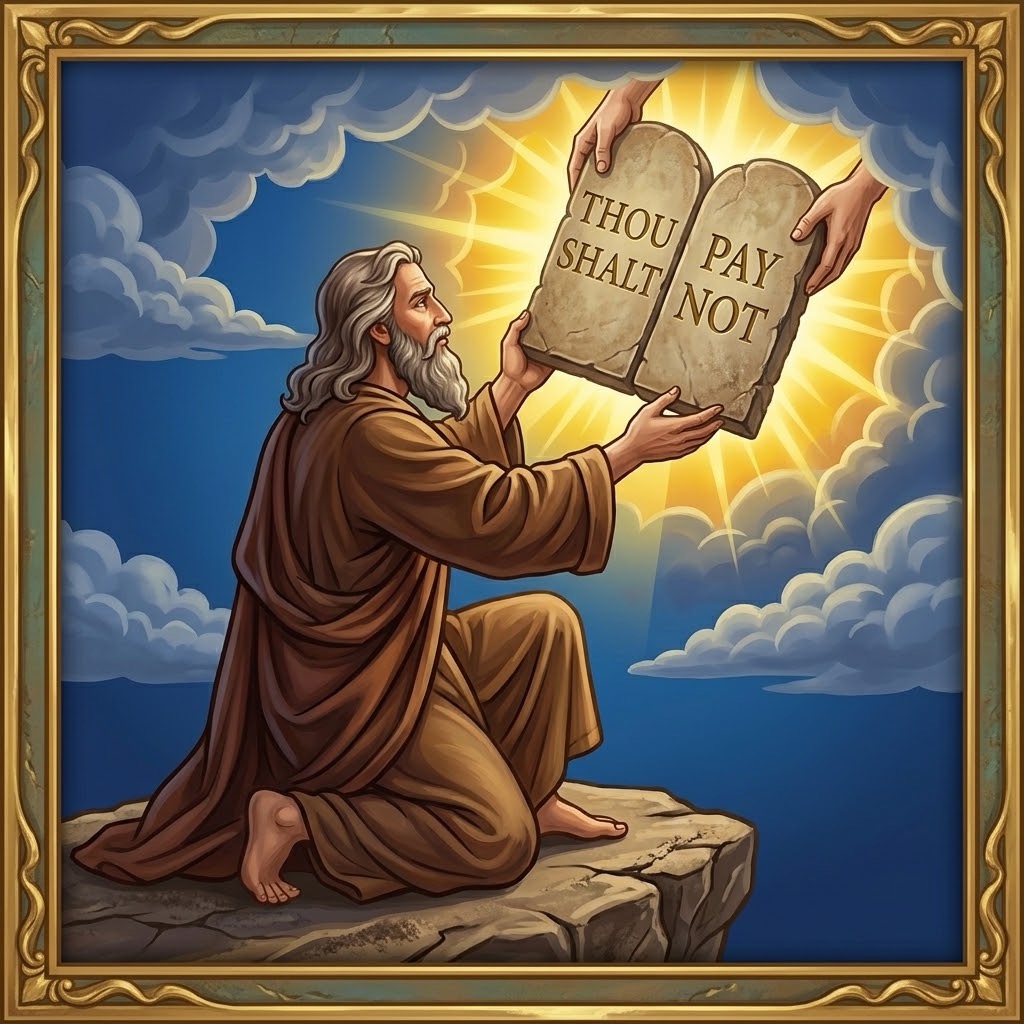
 Thou Shalt Park
 When a chaplain is called at 2 a.m., a parking gate shouldn't be in the way.
Clergy are summoned to hospitals at all hours — to sit with a frightened family, to administer last rites. Yet no law protects them, and they routinely pay to do sacred work at the bedside of the sick and dying. This project is changing that — first in Massachusetts, and then wherever someone is willing to carry it.
Almost every hospital says it extends a parking courtesy to visiting clergy. In practice, most publish no policy at all — and some advertise one, then quietly make it impossible to use. Thou Shalt Park Free exists to fix that two ways: help clergy get the parking they're already owed today, and pass a simple state law that ends the runaround for good.
Greater Boston & North Shore hospitals mapped, each step sourced and verifiable
Of those nine publish an actual clergy or visitor parking policy. The other six make you call and ask
State or federal laws that currently require free clergy parking. It's a courtesy — one that can vanish or be buried
Three things this site does
The problem, in the open
Why this happens, and the specific tactics big hospital systems use to advertise a clergy courtesy while making it unusable — routing you to an office that's dark at night, never posting the process, burying it behind a phone tree.
Read the problemA simple, sturdy law
One page of statute: if a hospital charges for parking, it can't charge clergy of any faith who are visiting a patient — free at the exit, at any hour, no separate office, no games. Written to treat every faith equally and stay on solid constitutional ground.
See the bill explainedPass it in your state
A plain-English playbook for someone who has never been near a statehouse: how to find your legislators, get a bill filed, line up support, and testify — with a model bill you can adapt, and a starting point for all 50 states.
Open the playbookPastoral care is a patient's right. The parking is the last barrier to it.
Hospitals are legally required to give patients access to spiritual care — it's written into state licensing rules and the federal Conditions of Participation that hospitals must meet to bill Medicare and Medicaid. A patient can ask for their own clergy, and the hospital must let that clergy member in.
But nothing says the visit has to be affordable for the person providing it. So a rabbi driving in for a bedside blessing, a priest coming for last rites at midnight, a pastor sitting with a grieving family — they pay the garage rate, every time, out of their own pocket, to answer a call that is part of the patient's care.
This isn't framed as a favor to clergy. It's framed around the patient's access to their own faith, and it applies to every tradition equally. That's what makes it fair — and what makes it hold up.
It costs hospitals almost nothing
Clergy pastoral visits are a tiny share of parking traffic, and many hospitals already claim to offer this voluntarily. The law mainly stops them from charging — or quietly obstructing — what they say they already provide.
There's a way to help
Sign or share if you're in Massachusetts. Send this to a chaplain or a congregation. Or take the bigger step and start the effort in your own state — you won't be doing it blind.